Guidelines for submitting articles to Hacienda Riquelme Golf Resort Today
Hello, and thank you for choosing Hacienda Riquelme Golf Resort.Today to publicise your organisation’s info or event.
Hacienda Riquelme Golf Resort Today is a website set up by Murcia Today specifically for residents of the urbanisation in Southwest Murcia, providing news and information on what’s happening in the local area, which is the largest English-speaking expat area in the Region of Murcia.
When submitting text to be included on Hacienda Riquelme Golf Resort Today, please abide by the following guidelines so we can upload your article as swiftly as possible:
Send an email to editor@spaintodayonline.com or contact@murciatoday.com
Attach the information in a Word Document or Google Doc
Include all relevant points, including:
Who is the organisation running the event?
Where is it happening?
When?
How much does it cost?
Is it necessary to book beforehand, or can people just show up on the day?
…but try not to exceed 300 words
Also attach a photo to illustrate your article, no more than 100kb
PROPERTY SEARCH
PROPERTY SEARCH
article_detail
Date Published: 06/03/2026
A century of change: The journey of Spanish women at work
ARCHIVED ARTICLE -
As International Women’s Day approaches, the evolution of women’s working lives in Spain reveals how resilience, reform and education reshaped the country’s workforce.
As Spain prepares to mark International Women’s Day on March 8, the story of women in the country’s workforce reveals just how dramatically society has changed over the past century. Known locally as the Día Internacional de la Mujer Trabajadora (International Working Women’s Day), the 2026 theme “Give to Gain” highlights the importance of supporting women’s advancement.
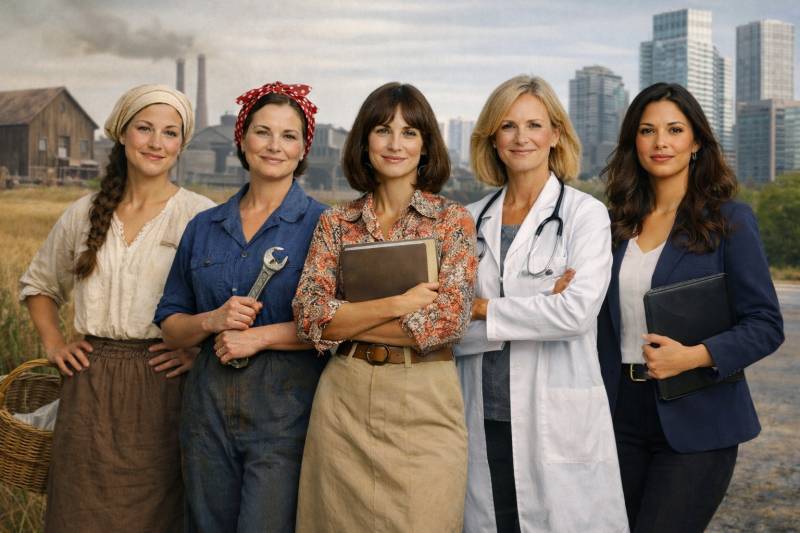
From unpaid labour in family homes to leadership roles in business, government and science, Spanish women have gradually transformed their place in the world of work.
From invisible labour to early opportunities
At the beginning of the 20th century, many Spanish women were already working, however much of that labour was hidden. Women commonly helped on family farms, ran small family businesses or worked in domestic service. Their contributions were essential to household economies, yet they were often poorly paid or not recognised as formal employment.
As Spain began to industrialise, new opportunities slowly emerged. In growing cities such as Madrid and Barcelona, women found jobs in textile production, tobacco factories and service industries. Even so, social expectations still largely centred on domestic life, and long-term professional careers for women were uncommon.
The reforms of the 1930s
The early 1930s brought an important moment of change during the Second Spanish Republic. Women gained the right to vote in 1931 and took part in national elections for the first time in 1933. Reforms during this period also expanded access to education and promoted greater legal equality.
While women’s participation in the labour market remained limited, these changes laid important foundations for future progress.
War reshapes the workforce
The outbreak of the Spanish Civil War in 1936 dramatically altered everyday life. With many men mobilised for military service, women stepped into roles in factories, agriculture, healthcare and wartime logistics.
Some joined organisations such as Mujeres Libres, which promoted women’s education, professional training and economic independence. For a short time, women’s participation in public and economic life grew significantly.
However, many of these advances were reversed after the war.
Restrictions under Franco
After the conflict ended, the dictatorship of Francisco Franco reinforced traditional gender roles. Women were encouraged to focus on marriage and motherhood rather than employment.
The law reflected this approach. Married women needed their husband’s permission, known as permiso marital, to work, open a bank account or sign a contract. Divorce and contraception were banned, and several professions remained closed to women.
Despite these barriers, many women still worked out of necessity, particularly in agriculture, domestic service and family businesses. By the 1960s, Spain’s economic expansion also brought new job opportunities in offices, factories and the rapidly growing tourism sector.
A turning point after 1975
The death of Franco in 1975 marked a major shift. Spain’s transition to democracy led to sweeping legal reforms that removed many discriminatory laws.
The permiso marital was abolished in 1975, and the Spanish Constitution of 1978 formally established equality before the law regardless of gender. Divorce was legalised again in 1981.
But legal changes alone were not enough. As Spanish institutions later recognised, achieving real equality also required changing attitudes, behaviours and social structures that limited women’s opportunities.
Building equality through policy
One of the most important steps came in 1983 with the creation of the Institute of Women, established to promote equality and ensure women could fully participate in political, cultural, economic and social life.
The organisation focused on raising awareness of women’s rights, offering training programmes and coordinating equality policies across government. It also helped introduce a series of Women’s Equal Opportunities Plans, which set out measures to reduce gender discrimination in areas such as education, employment, health and family policy.
Later legislation strengthened these efforts, including the Comprehensive Protection Measures against Gender-Based Violence Act (2004) and Organic Law 3/2007, which aimed to ensure effective equality between women and men.
A rapid rise in female employment
Over the last few decades, Spain has experienced one of the most significant increases in female employment in Europe. Between 1993 and 2007, employment in Spain grew rapidly, with women taking around half of the eight million new jobs created during that period.
Female employment rates rose from 26.3% to 41.5%, marking one of the largest increases in the European Union.
This transformation has been closely linked to rising education levels among women. In the mid-1980s, around 24% of women over 16 had not completed elementary education, and only 6% held tertiary degrees. By the late 2000s, those with low levels of education had dropped to 3%, while 16% held higher education qualifications. Among younger women, the share with tertiary education exceeded 30%, even surpassing that of men.
As a result, women increasingly entered professions such as law, medicine, journalism, engineering and public administration.
Changing roles in modern Spain
Today, women are present across almost every sector of Spain’s economy, from healthcare and education to finance, technology and public leadership.
The change has been so significant that researchers describe the rise in female employment as one of the most radical social transformations in Spain over the last 30 years.
However, many women still carry the majority of domestic and caregiving responsibilities. In the early 2000s, women performed around three quarters of domestic work, averaging more than four hours per day compared with around one hour for men. Even as this gap has narrowed, women still undertake the majority of unpaid household work.
Progress... and ongoing challenges
Despite the progress, challenges remain. Women are still more likely than men to hold temporary or part-time jobs and are underrepresented in senior corporate leadership roles.
Balancing work and family responsibilities also continues to shape employment patterns, particularly in a country where family support networks have historically played a central role in providing care.
At the same time, social expectations are changing. Most Spaniards now support a dual-earner model, where both partners work and share responsibilities at home.
International Women’s Day in Spain
International Women’s Day has also become a powerful moment of public mobilisation in Spain. Since 2018, large demonstrations and nationwide strikes have highlighted issues such as wage inequality, unpaid care work and gender-based violence.
Cities including Madrid, Barcelona and Sevilla have hosted some of Europe’s largest March 8 demonstrations.
A century of change
Looking back over the past hundred years, the journey of Spanish women in the workplace reflects a much broader transformation in society.
From limited access to formal employment in the early 1900s to widespread participation across nearly every profession today, the progress has been profound.
As Spain marks International Women’s Day again this year, the story of women at work is both a reminder of how far the country has come - and how important it remains to continue working toward full equality.

















 As Spain prepares to mark International Women’s Day on March 8, the story of women in the country’s workforce reveals just how dramatically society has changed over the past century. Known locally as the Día Internacional de la Mujer Trabajadora (International Working Women’s Day), the 2026 theme “Give to Gain” highlights the importance of supporting women’s advancement.