






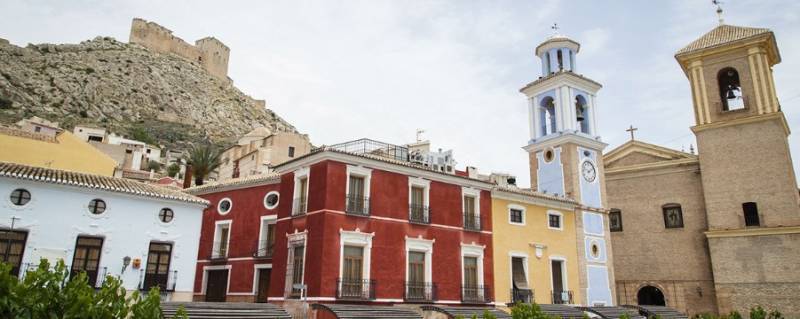
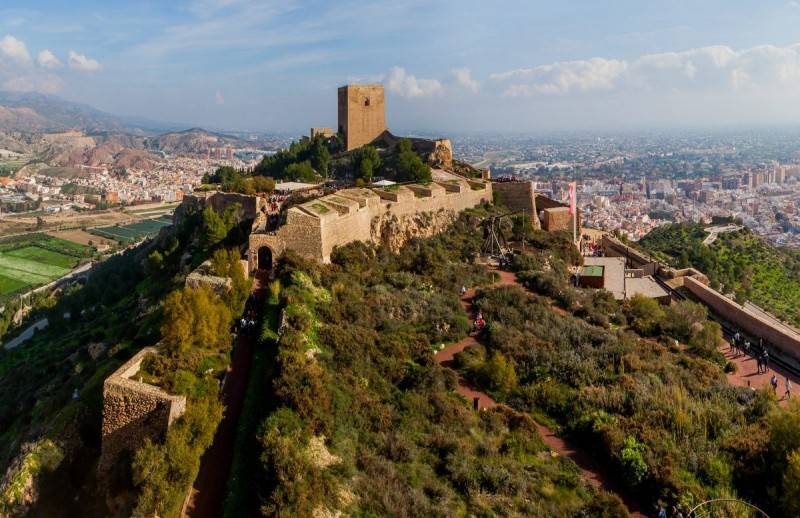



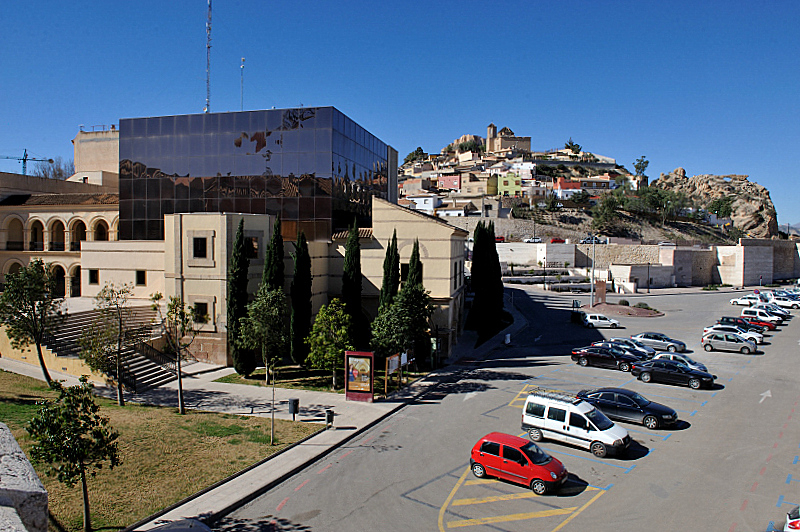
 The city of Lorca is famed for many things, some of them making the city proud and others still causing grief: for example, the impregnable castle which stands high on the hill behind the town or, at the other end of the scale, the devastating earthquakes which struck the city in May 2011, causing at least nine deaths and enormous damage to buildings, both residential and monumental.
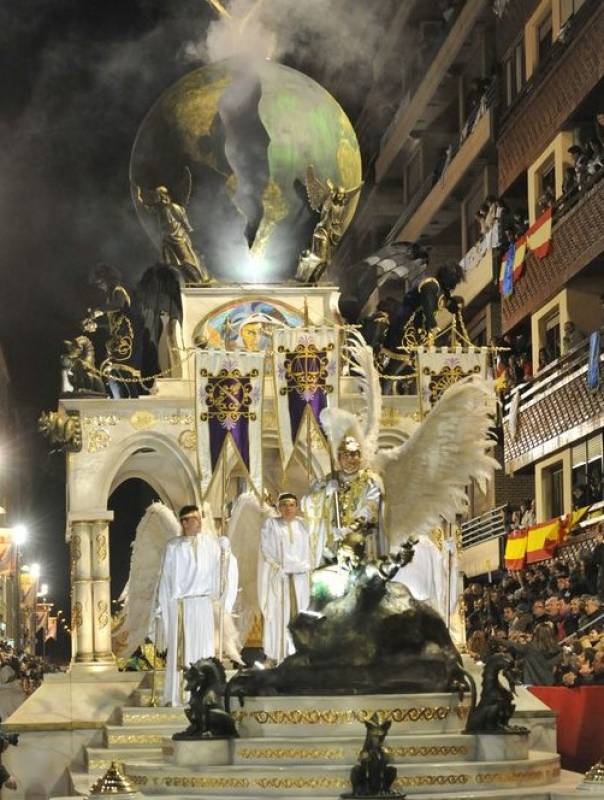 But one aspect of Lorca which unites the whole city and to a large extent defines its identity is the annual Holy Week processions, especially those of Maundy Thursday and Good Friday. On those days the population divides into two rival factions, “the Blues” and “the Whites”, as the Paso Azul and Paso Blanco groups compete with each other to stage the most eye-catching and colourful biblical parade.
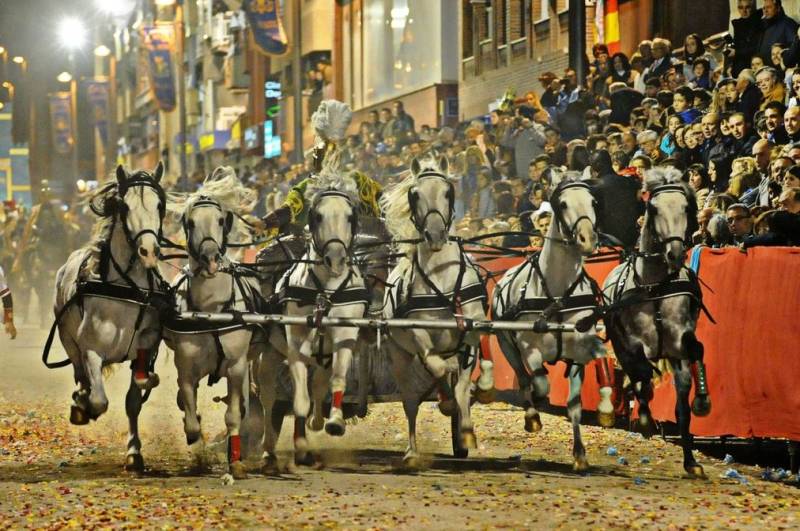
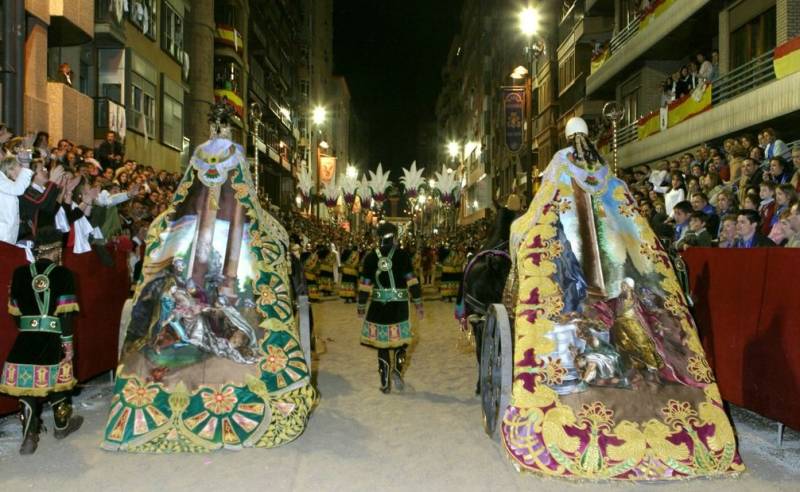
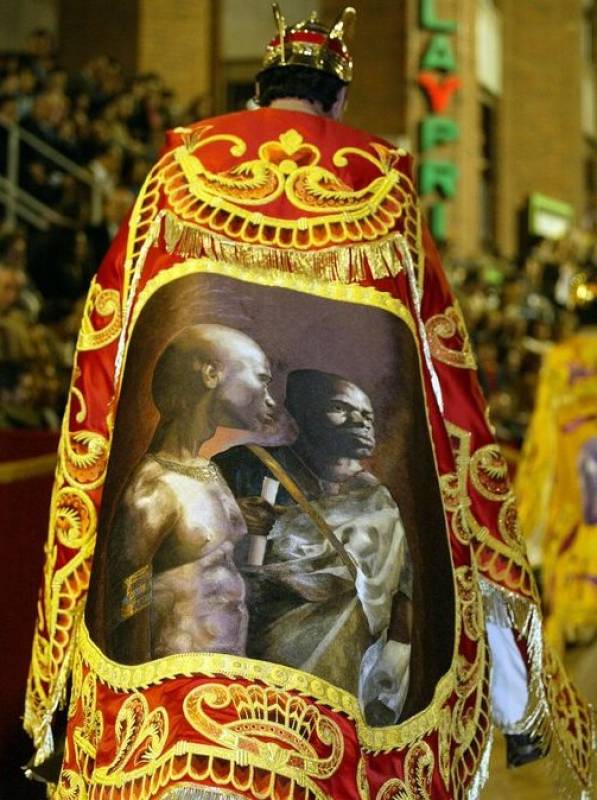
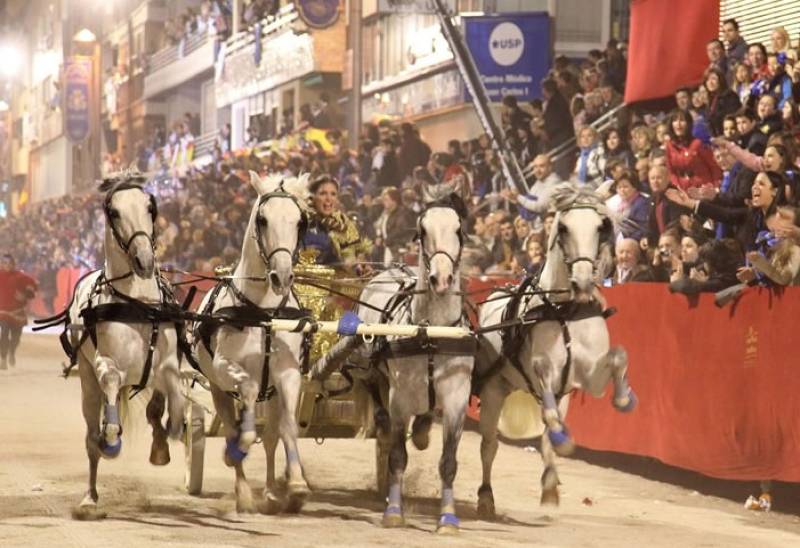
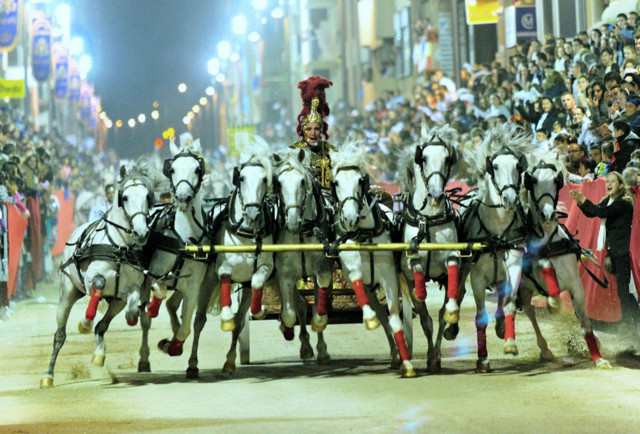
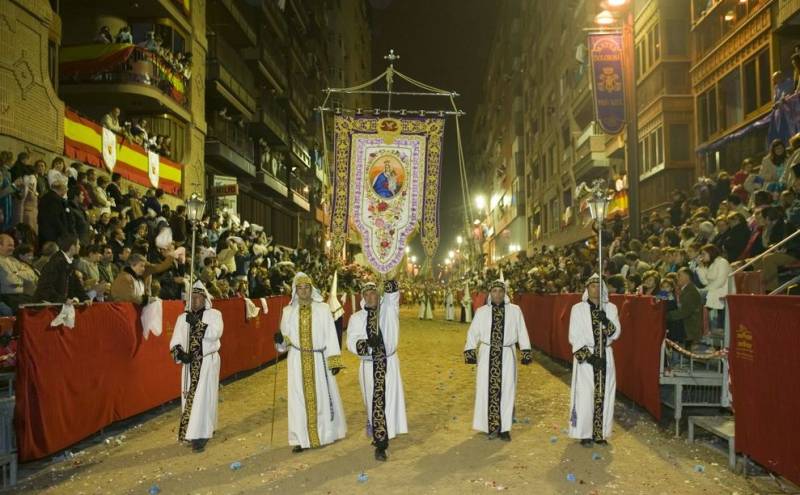 These two events are very different from the realtively solemn processions which take place throughout Spain. Instead of being based on the Passion, they represent elements from the biblical history of the Old Testament and are enlivened by the wearing of exquisitely embroidered cloaks and costumes, and the daredevil riding of Roman chariots (complete with horses) in the main streets of the town.
The spectacle is an awesome one, and every year the route is lined with packed stands of spectators who have paid for the privilege, often months in advance!
These visitors come from all over the world, and the week of Semana Santa accounts for a significant proportion of the international tourists coming to Lorca!
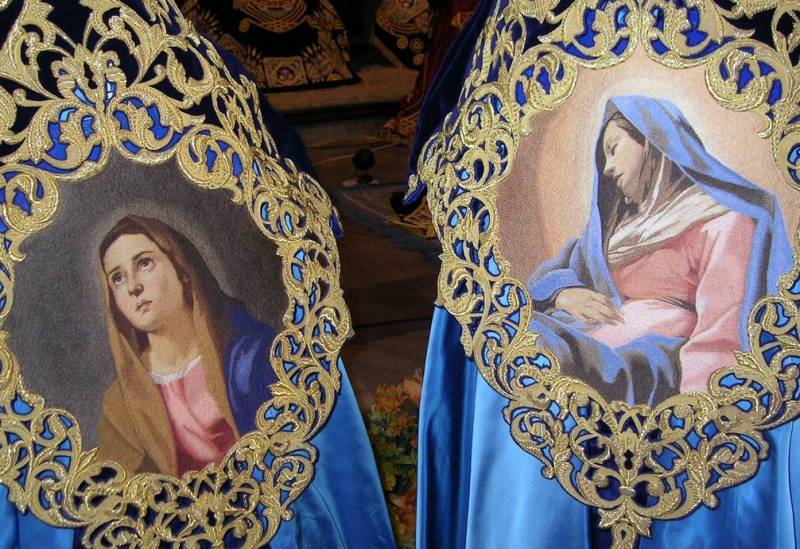 Not only are there various Semana Santa museums in Lorca, displaying embroidery, statues and other accoutrements related to the processions and parades, there are also numerous cultural events organized by the participating brotherhoods, especially the Paso Blanco and the Paso Azul.
The main events of Lorca’s annual Semana Santa celebrations are the following:
Friday of Sorrows (a week before Good Friday)
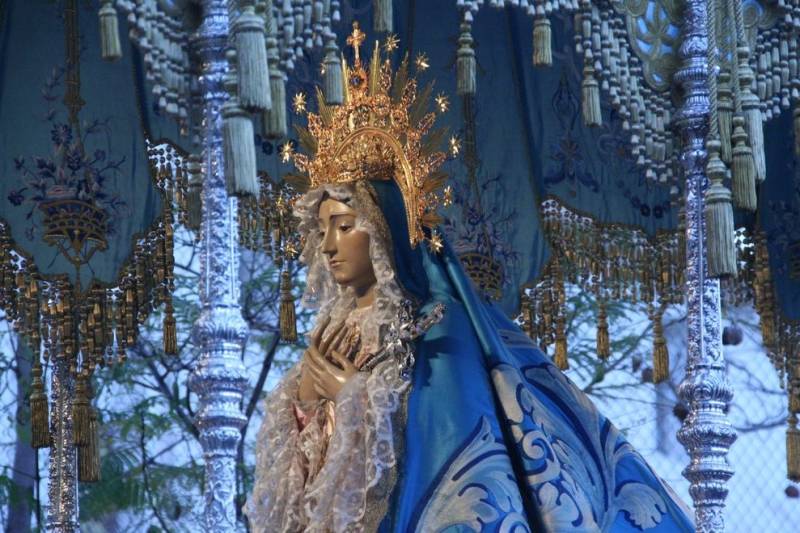
 The first of the biblical processions is held by the Paso Azul as the figure of the Virgen de los Dolores (Our Lady of Sorrows) leaves the church of San Francisco.
Various banners or standards which are works of art in their own right accompany her.
Passion Saturday
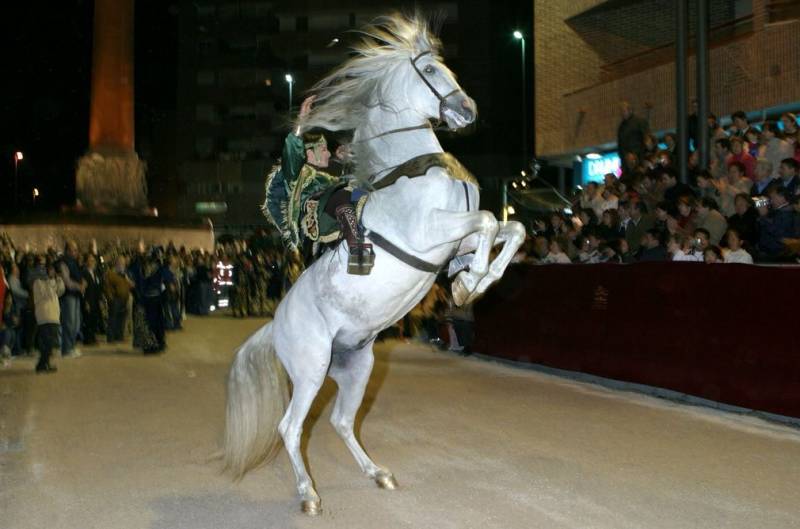 The Paso Negro take centre stage in the streets around the monumental Former Collegiate Church of San Patricio in a traditional Spanish Easter parade which features the figure of the Virgen de la Soledad.
 Palm Sunday
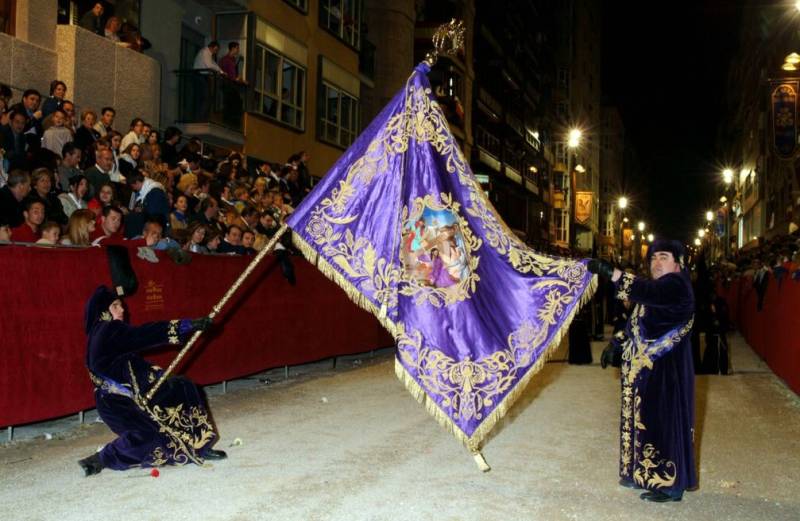
The second biblical parade features the Paso Blanco representing the Hebrew people in the Bible while the Paso Azul portray the Romans, Ethiopians and Egyptians, including Pharaoh Ramses II and Princess Meiamén, who rescued the infant Moses from the waters of the Nile.
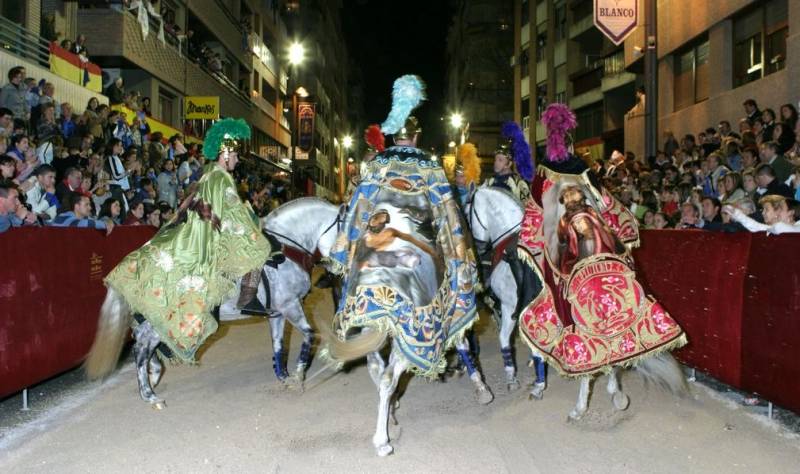 The Whites’ party includes David and Solomon as thousands of members commemorate the arrival of Jesus in the Jerusalem carrying palm leaves and olive sprigs.
Finally, the Paso Negro appear again with the figure of the Virgen de la Soledad.
Maundy Thursday
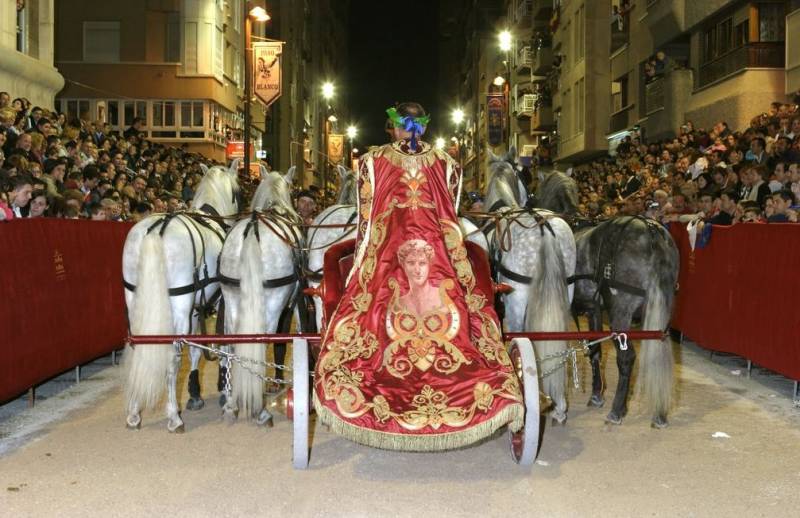 The first of the two “main events”, in which Whites and Blues fill the streets with horses, chariots, colour, noise and atmosphere as they represent scenes of Egyptians, Jews, Babylonians, Hebrews, Romans and even the Triumph of Christianity.
Avenida Juan Carlos I is awash with noise as the characters appearing include Moses and the twelve disciples at the Las Supper.
 This is followed by a far more sombre Procession in Silence, starting in the district of San Cristóbal and featuring statues of the Señor de la Penitencia, the Virgen de la Soledad and the Cristo de la Sangre.
Good Friday
 The day begins with a Vía Crucis to Calvary (not the Calvary in the Bible, the hill which has been named after it in Lorca), organized by the Paso Morado.
But for many Lorquinos, the day is all about the second main parade, which again attracts crowds of thousands (and no more because they wouldn’t fit onto the streets!). Behind the Paso Blanco come the Paso Encarnado and the Paso Morado, and then the main episodes represented include those involving Julius Caesar, the Fallen Angel, the Triumph of Christianity, the Prophetess Deborah, the Egyptian cavalry, Cleopatra, Nero, Octavius, Esther, Solomon and, finally, the Tribes of Israel.
Easter Sunday
 The final procession depicts the Resurrection, setting out from the church of San Patricio with the figures of Nuestro Señor Jesús Resucitado and María Santísima de la Encarnación y Asunción.
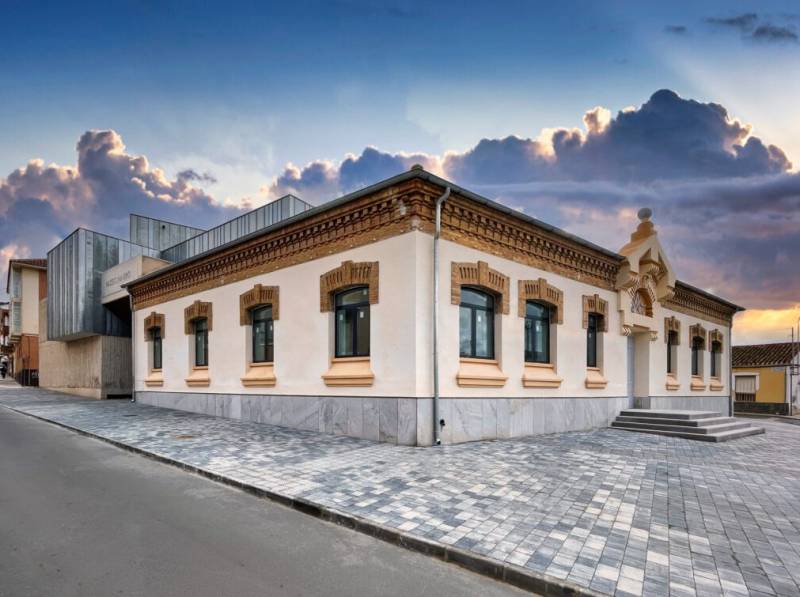
The rich and extensive history of Lorca has left a legacy of archaeological sites and historic buildings around which the modern city has built its tourism industry. Amongst these are Lorca Castle, Plaza de España, the former Collegiate church of San Patricio, the municipal archaeological museum, the Casa Huerto Ruano, the Palacio de Guevara and the churches and convents of San Francisco, San Mateo, the Virgen de las Huertas, La Merced, El Carmen and many others.
Unfortunately, Lorca has been prone to natural disaster, suffering a severe flood in 1973 which killed 50 people, and a Gota Fría on September 28th 2012, as well as a series of earthquakes, the most recent of which was 5.3 on the Richter scale on 11th May 2011 and claimed 9 lives.
 Lorca also has an area of unspoilt coastline incorporating the Parque Regional de Cabo Cope - Puntas de Calnegre, which includes the beaches of Puntas de Calnegre, Cala Calnegre and various others. Although only one is accessible by road others can be reached along dirt tracks!
In terms of fiestas, Lorca is synonymous with Easter (Semana Santa), its biblical parades of International Tourist Interest status being famous throughout Spain. The week includes a series of parades in which the whites (Paso Blanco) and blues (Paso Azul) try to outdo each other with the magnificence of their embroideries and the skill and daring of their horsemen.
In the Autumn Lorca also celebrates the Fiestas of San Clemente and a Feria and there are a series of important events throughout the year in the Recinto Ferial, as well as a busy cultural and sporting programme.
The tourist office relocated for 14 years to Calle San Patricio, near the church, but has now returned to its former premises alongside the Palacio de Guevara in the Plaza Concha Sandoval, or Plaza de la Bordadora (click for map).
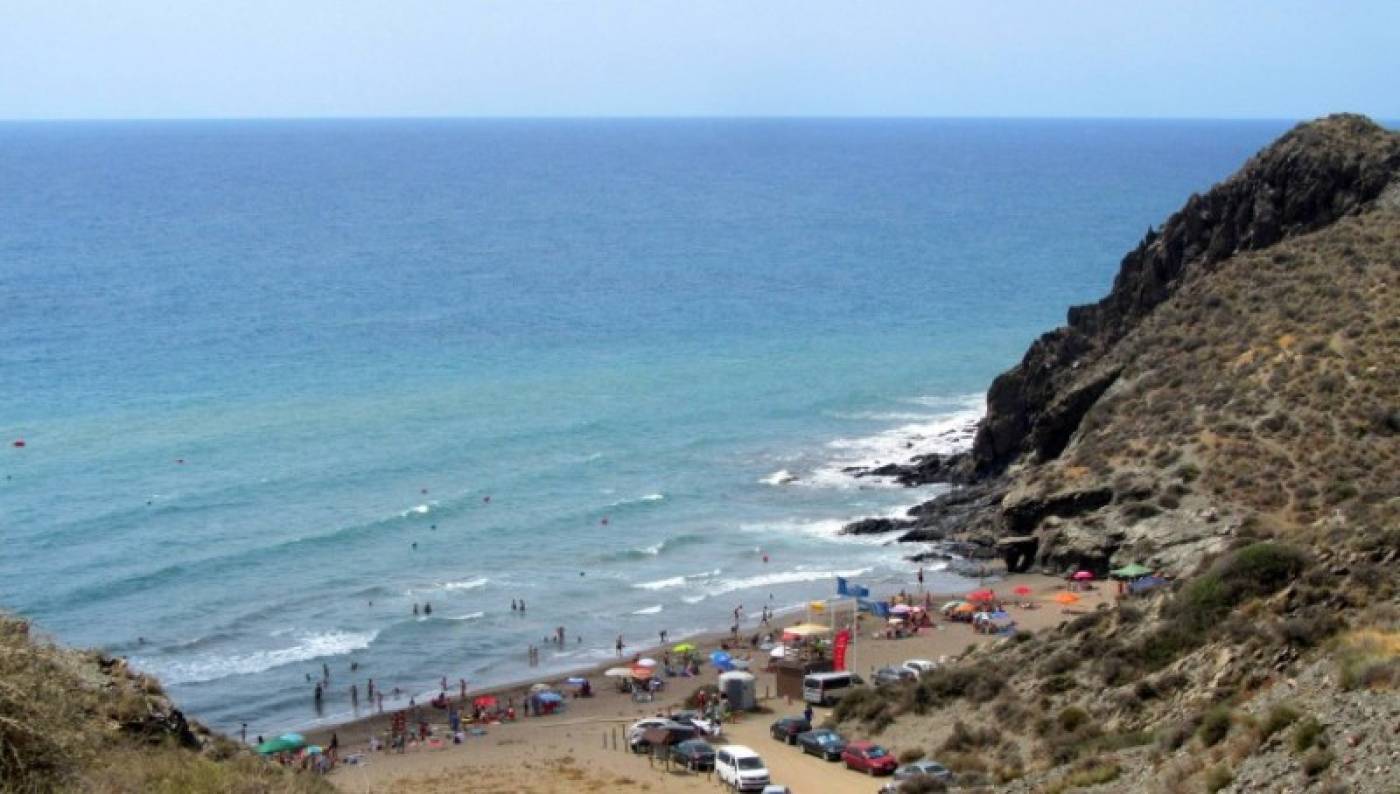 Lorca also has an area of inspoilt coastline incorporating the Parque Regional de Cabo Cope - Puntas de Calnegre, in the Sierra de Almenara, which includes the beaches of Puntas de Calnegre, Baño de las Mujeres, San Pedro, El Siscal, Cala Honda, Cuartel del Ciscar, Junquera, Cala de la Gruta, Cala Leña, Los Hierros, Cala Blanca and Playa Larga, although many are accessible only along difficult tracks or by boat!
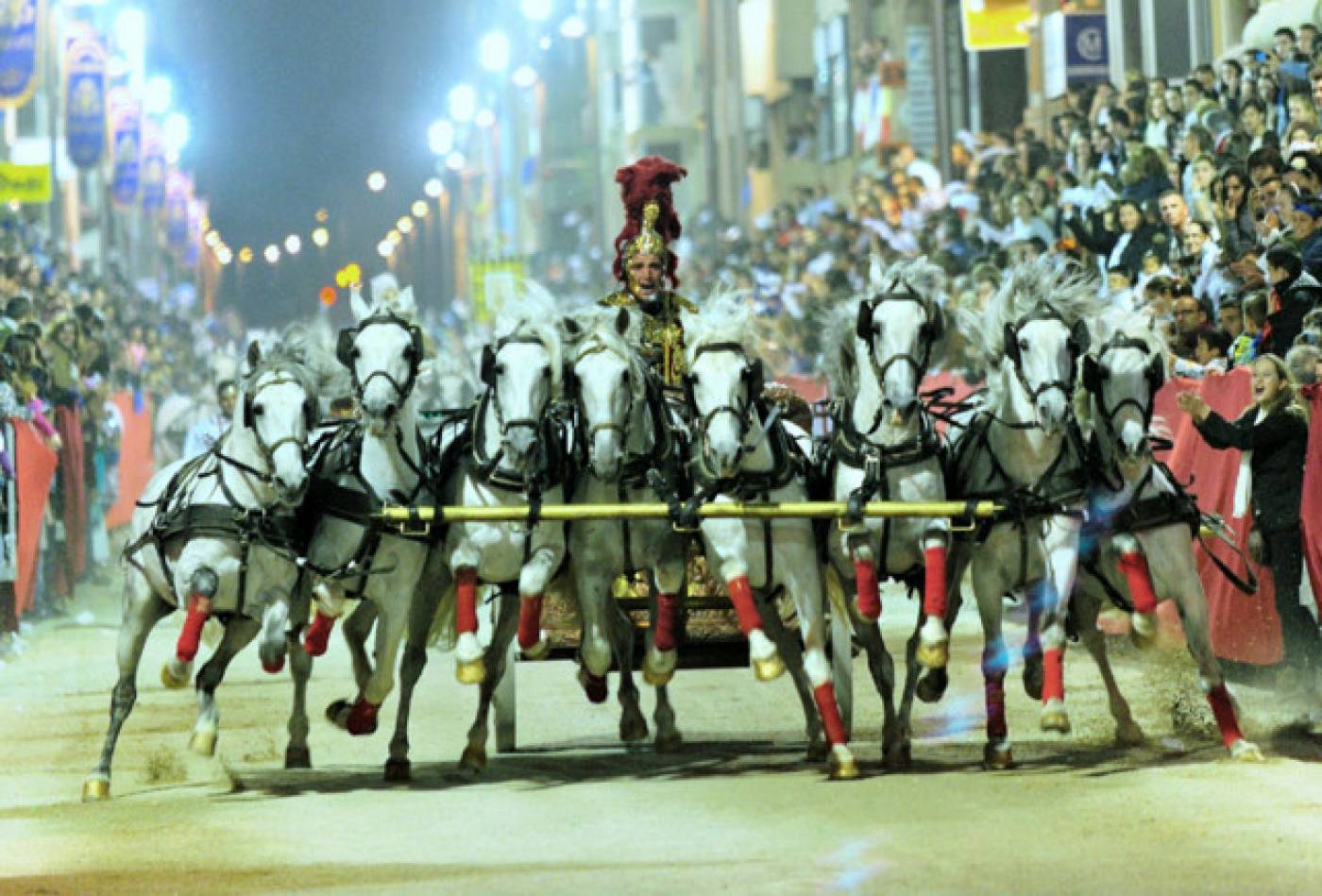 However, in spite of its many attractions, the name of Lorca is synonymous with Easter, (Semana Santa) its biblical parades of International Tourist Interest status and famous throughout Spain. The week includes a series of processions in which the Whites (Paso Blanco) and Blues (Paso Azúl) try to outdo each other with the magnificence of their embroideries and the skill and daring of their horsemen.
Lorca also has a Parador hotel, located within the historic castle.
Every day of the year apart from 1st and 6th January and 25th December, 10.00 to 14.00 and 16.30 to 18.30 (except Sunday afternoons).
These opening times are often extended and other information points created during the Semana Santa celebrations.
For more local news, events and visiting information go to the home page of Lorca Today