




















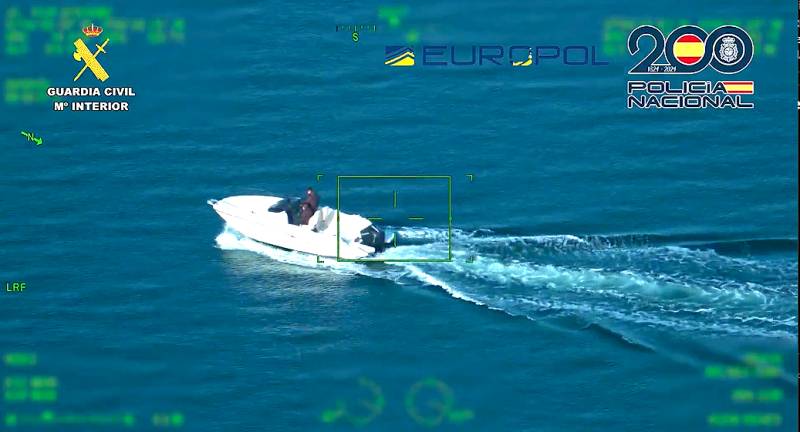
A suspected criminal network accused of smuggling migrants into Spain using high-speed 'taxi boats' has been dismantled following a joint operation involving Spanish and European authorities.
The operation, led by the National Police and the Guardia Civil, with support from Europol and French police, resulted in seven arrests. Six of those detained were in Alicante, with a further arrest made in Marseille.
The group is believed to have been involved in organising irregular crossings from North Africa to Spain's south-eastern coastline, mainly through Murcia, Almería and Alicante, using fast inflatable boats fitted with powerful engines.
According to investigators, those involved are suspected of facilitating illegal immigration, belonging to a criminal organisation, smuggling, and crimes against property.
The investigation, which began in mid-2025 under Operation 'Barón-Galón', uncovered what authorities describe as a structured and coordinated network.
At the centre of the operation were semi-rigid inflatable boats, often referred to as 'taxi boats', used to carry migrants across the Mediterranean. Police say many were stolen in Spain or France, while others were obtained using false documents or fraudulent rental agreements, with the network largely coordinated by Algerian nationals based in Alicante who handled logistics including fuel, accommodation, transport and the movement of boat operators.
Investigators also found that the group identified and monitored specific areas along the coast that they considered safer for arrivals, in an effort to reduce the risk of detection, and in some cases, is suspected of having links to ports where boats were stolen and later used in smuggling operations.

The investigation also revealed links beyond Spain, particularly in France, where some of the boats and vehicles used in the operation were believed to have been sourced. This international element led to closer cooperation between Spanish authorities and French police, coordinated through Europol, helping investigators share information and identify suspects more effectively.
Two searches were carried out in Alicante and another in Santa Pola, where officers seized documents, cash and mobile phones believed to be linked to the network.
All seven suspects are men, reportedly of Algerian and Libyan nationality, aged between 25 and 40.
As police continue to crack down on 'taxi boat' smuggling networks along the east coast, Spain has reported changes in migration in recent months.
According to figures from the Ministry of the Interior, 10,224 migrants entered Spain illegally between January 1 and May 31, 2026, which is a drop of just over 35% compared with the same period last year.
Sea arrivals have fallen overall, although the trend varies depending on the route, with the Canary Islands seeing a sharp decline while mainland Spain and the Balearic Islands have recorded modest increases.
At the same time, land arrivals to Ceuta and Melilla have risen sharply, with more than 2,300 people entering irregularly so far this year, which is an increase of over 200%, most of them arriving in Ceuta.
Overall, the data suggest that while overall irregular migration has fallen, it isn't going away. As the police crack down in certain areas, the pressure is shifting to different routes.
Authorities say criminal networks continue to adapt quickly, using different methods and routes depending on policing, the terrain, and the opportunities they find.
Ultimately, it raises questions about the underlying cause of migration and why people continue to make these extremely difficult journeys despite the risks and increased enforcement.
Images: Guardia Civil
Read more articles about undocumented migration in Spain: