










Spanish News Today Editors Roundup Weekly Bulletin August 28
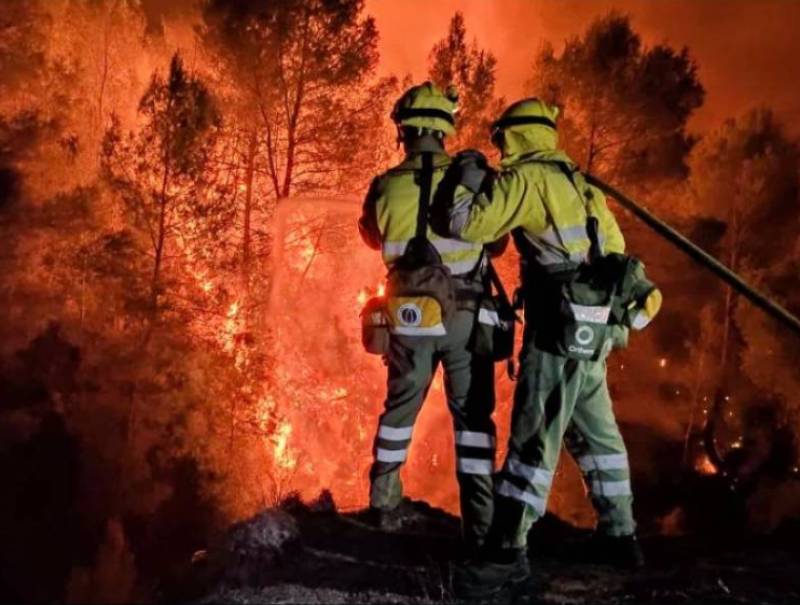
We're really hoping this is the last week we need a wildfire photo for the cover image. As we head into September the worst of the heat should finally start to ease, but it's been a brutal summer for fires across Spain, and the weather generally has had a distinctly weird streak running through it this week, from violent storms and huge hailstones to some seriously unsettled seas.
Away from the skies, there's plenty more to get through too, including the great Spanish tipping debate, rising food and electricity costs, a stubborn mystery surrounding an abandoned jumbo jet in Valencia, and some considerably happier news involving a beach full of newly hatched turtles.
So let's take a look at what's been making headlines.
Weird & wacky weather
It hasn't just been a strange week for weather in Spain. Around the world, extreme weather has been making headlines too, especially the devastating situation in Nepal. Here in Spain, thankfully, the stories have not been on anything like the same scale, but it has still been quite a week.
We've had violent storms, enormous hailstones, sudden movements in the Mediterranean and some seriously high temperatures, especially at night. And, of course, there are the wildfires, with hundreds of thousands of hectares already affected this year.
First up was a spectacular downburst caught on camera in Lorca, Murcia, as a powerful storm swept across the area on August 20.
The footage, shared by MeteOrihuela, shows a dense curtain of rain descending from the storm over Avilés, a hamlet in the Lorca municipality. They described the phenomenon as a downburst, or reventón, which is a particularly intense burst of descending air associated with a thunderstorm. And while it might look rather like a tornado, it is actually quite different.
A downburst happens when air rapidly sinks from a storm, hits the ground and then spreads outwards at high speed. The resulting winds can be extremely powerful, with gusts of more than 100 km/h possible, but unlike a tornado, there is no rotation around a central point.
The downburst came as part of a day of unsettled weather across Murcia and other parts of southeastern Spain, following a prolonged spell of extreme heat. Lorca reached 37.4°C, while another downburst in the centre of Jumilla produced winds of 92 km/h.
For anyone caught underneath one, the combination of torrential rain and violent winds appearing almost out of nowhere can be both confusing and dangerous.
Then came the storm in Tarragona.
A powerful storm swept across the area on Monday August 24, bringing torrential rain, huge hailstones and winds of up to 117 km/h. More than 77 litres of rain per square metre was recorded in Tarragona, while Vinyols i els Arcs received 88 litres in just three hours. In some areas, hailstones measured more than 5 centimetres across.
The intensity of the storm quickly caused problems, with streets and underpasses flooded, trees and branches brought down and vehicles damaged. The hail also broke some windows.
Emergency crews had to help drivers trapped by floodwater, while rail services on several lines were suspended because of flooding on the tracks. There were also problems on the AP-7 after branches fell onto the road. The 112 emergency number received more than 769 calls related to flooding and damage, while the Bombers de la Generalitat dealt with 402 incidents. Three people were taken to hospital, although none of the injuries was considered serious.
A video shared online showed another devastating consequence of the storm, with dozens of pigeons apparently killed by the huge hailstones.
But it didn't stop there. Something even more unusual took place along the Mediterranean coast. If a downburst and a huge hailstorm weren't enough, the Mediterranean decided to get involved too. A meteotsunami was seen along parts of the Costa Blanca, Valencia and the Balearic Islands on August 24 and 25, with sudden changes in sea level of up to 70 centimetres recorded in just a few minutes.
Despite the rather dramatic name, a meteotsunami isn't caused by an earthquake. It begins in the atmosphere, when rapid changes in air pressure create atmospheric gravity waves. Under the right conditions, these can affect the sea surface, causing the water level to rise and fall. The shape of the coastline can then make the effect much more noticeable, particularly around shallow waters, bays and enclosed or partly enclosed ports.
The phenomenon was reported in Gandía, Cullera, Xàbia, Santa Pola, Elche, Torrevieja and Orihuela Costa. In Gandía, the sea level changed by around 70 centimetres in just six minutes. Further south, Santa Pola saw the sea suddenly pull back, exposing parts of the seabed before the water moved back towards the shore. At Playa Lisa, the water reached the seafront and temporarily forced the closure of part of Avenida Blasco Ibáñez.
Mallorca also experienced several rissagas, as the phenomenon is known in the Balearic Islands, while Menorca was placed on alert for possible sea-level fluctuations of up to 1.2 metres.
 The storms and the meteosunami may have been dramatic, but there is another side to this summer's weather that is proving much harder to escape: the high temperatures, especially at night. Many parts of the Region of Murcia have recorded minimum temperatures above 20°C for weeks at a time, while some areas have barely dipped below 25°C.
In Murcia city, virtually every night throughout July and August so far has been a tropical night, meaning temperatures have failed to fall below 20°C. There have also been 18 nights when temperatures stayed above 25°C. These are classed as torrid or equatorial nights. And then there are “hellish nights”, the rather memorable term now being used for nights when temperatures stay above 30°C. Aemet says areas of Cataluña have already recorded some, and Murcia may not be far behind.
For those living along the Costa Cálida, the warmer sea and high humidity make the problem even more noticeable. At San Javier's weather station, the average maximum temperature last month reached 32.7°C, the highest July average recorded there since records began. There were also 16 days this summer when temperatures did not fall below 25°C. A decade ago, that happened on just three days across July and August.
The change isn't limited to the coast either. In inland towns like Caravaca de la Cruz, temperatures have stayed above 20°C on ten nights this summer. In 2016, there were just two such nights across the whole of July and August.
The prolonged heat is also having another serious consequence, with wildfires continuing to spread across Spain.
More than 262,000 hectares of land had been affected by wildfires across Spain by August 20, according to provisional national figures. There have been 43 major forest fires, classed as fires affecting more than 500 hectares, so far this year. The figures are still below last year's exceptionally high levels, but Spain is still in the main wildfire danger period and the risk is far from over.
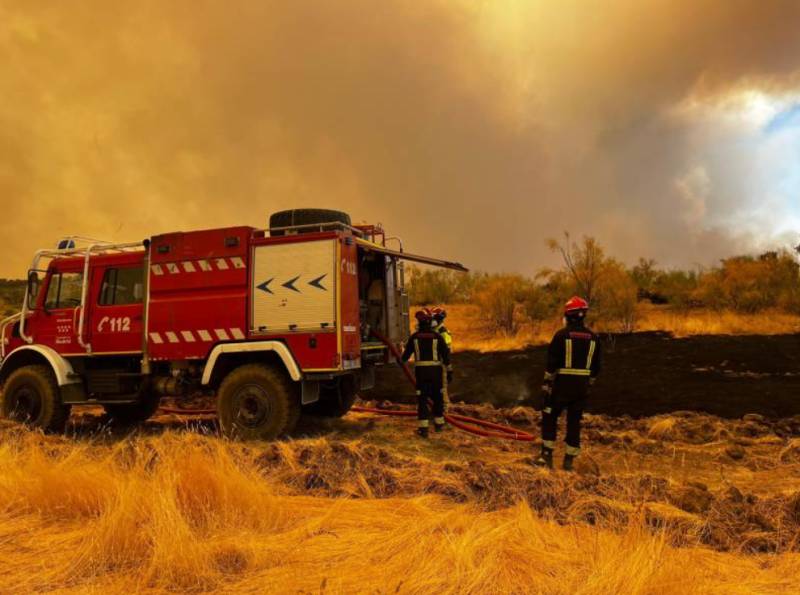 The European Commission's Copernicus wildfire information system puts the area affected even higher, at almost 297,000 hectares up to August 19. That represents around 48% of the total area affected by wildfires across the European Union.
There is at least some encouraging news though. On August 17, the area affected by forest fires finally dropped below the figure recorded on the same date last year. Cooler temperatures and rain expected in parts of Spain this weekend could bring some welcome relief too. But it is far too early to relax.
Last summer showed just how quickly the situation can change. Between August 5 and August 19, 2025, the area affected by fires jumped from 45,221 hectares to 367,520 hectares. The year eventually ended with 393,079 hectares affected, making it Spain's worst year for wildfire damage since 1994.
It has certainly been a pretty crazy week weather-wise. Temperatures should start to cool down as we head towards September, but if these summer storms are anything to go by, we could be in for an interesting autumn.
Tipping point

You’ve had the meal, you’ve had the wine, you’ve had the lovely chat with the waiter and now comes the moment of truth.
The card machine appears.
“Would you like to leave a tip?”
Suddenly you’re doing the mental math. Is 5% enough? Is 10% too much? Are you supposed to tip at all? And if you press “no tip”, are you about to be judged by the waiter, the people at the next table and possibly the entire restaurant?
Welcome to the increasingly complicated world of tipping in Spain.
For years, the Spanish approach was wonderfully straightforward. If you had a good meal and the service was great, you might leave a few euros on the table. You might round up the bill. You might leave nothing. Nobody seemed particularly bothered.
Then along came the card machine tipping prompt.
Suddenly, something that was once a little gesture of appreciation can feel like a decision you’re expected to make in public, with a percentage staring back at you.
The good news is that Spanish diners themselves don’t seem particularly keen on this new development.
New figures from TheFork Lab show that just 25% of people in Spain always leave a tip, while 58% do so occasionally, depending on the food and service. Another 15% never tip.
And when they do leave something, it’s usually nowhere near the eye-watering percentages that have become normal in some other countries. Some 63% leave less than 5% of the bill, 35% leave between 5% and 10% and just 2% go above 10%.
So, if you’ve ever sat there wondering whether you’re expected to add 15% or 20% to your Spanish restaurant bill, it seems you can put the calculator away.
The reason is largely that people here don’t see tipping as an automatic part of eating out. Some 61% believe the price of the meal already covers the service, while 19% think staff salaries make an additional tip unnecessary.
That doesn’t mean Spaniards don’t appreciate good service. Quite the opposite. A good meal combined with attentive service is enough to persuade 57% of people to leave something extra, while 36% specifically mention the quality of the waiting staff.
In other words, “That was fantastic, let’s leave the waiter a couple of euros” is much more the Spanish approach than “The bill is €86.50, so that’ll be €103.80 with the compulsory-looking 20% tip.”
Perhaps the most entertaining statistic of the whole survey, though, is what people actually want to happen to tipping in Spain.
They want it to disappear.
A huge 77% of those surveyed would prefer tipping to be phased out completely. Just 22% want the current system to continue and a tiny 1% would like to see tipping increase.
Yes, one per cent.
So, where does that leave those of us who are never quite sure what we're supposed to do when the card machine arrives?
Pretty much where we started.
If the service was brilliant and you want to leave something, leave something. If you want to round up the bill, round it up. And if you don’t want to tip, pressing “no” doesn’t appear to make you some sort of terrible person.
In fact, judging by these figures, there’s a very good chance the Spanish diner sitting at the next table is secretly delighted that you didn’t.
Fancy a career change?

Fancy a change and think you’ve got a knack for sales? STO Media Group is looking for sales talent across Alicante, Murcia and Almería.
The team behind Spanish News Today, Murcia Today, Alicante Today, Andalucia Today, TKO Radio and Home & Living Magazine is expanding and looking for motivated people to join our sales operation.
There are opportunities in both field sales and telesales, and while experience is welcome, it’s not everything. If you’re confident talking to people, good at building relationships and already have contacts in the local business community, you could have exactly the sort of skills we’re looking for.
The role involves helping local businesses find the right advertising opportunities across STO Media Group’s online, print and radio platforms, with plenty of scope to develop your own network of clients.
If you’re self-motivated, enjoy meeting people and like the idea of working independently while building something of your own, it could be worth a conversation.
Interested? Call 711 062 150 to find out more.
Murcia

There’s one item in the Region of Murcia that has really taken the biscuit when it comes to food price rises: eggs, which have gone up by 60.5% since July 2022. Unfortunately for our wallets, plenty of other pantry and fridge staples are also bursting the budgets.
Lamb has become 36.6% more expensive over the same period, beef is up 32% and coffee, cocoa and infusions have risen by 29.4%. Potatoes and potato products have gone up by 24.8%, while prepared pulses and vegetables are now 22.7% more expensive.
Overall, prices in the Region are around 11.4% higher than they were four years ago, according to figures from the Centre for Regional Statistics (CREM), based on the Consumer Price Index. Inflation has eased considerably from the highs of recent years, but that doesn’t mean prices have fallen. Murcia recorded annual inflation of 3.7% in July, slightly above Spain’s 3.6%.
The reasons behind the increases include the disruption caused by the Covid-19 pandemic, Russia’s invasion of Ukraine and extreme weather affecting food production. Smaller harvests can mean less food available to meet demand, pushing prices up and adding to costs elsewhere as businesses pass higher food and energy bills on to customers.
That’s changing what people buy, too. Consumur says lower-income households have been cutting back on meat, fish, fruit, eggs, vegetables and milk, while prepared meals, frozen food and fast food have become more popular, particularly among younger people.
A single person is now estimated to spend around €100 to €150 a week on food, while a middle-income family of three or four can spend between €320 and €400. Switching to supermarket own-brand products could make a sizeable difference, with Consumur estimating savings of between 35% and 45%.
For some people, though, property is looking considerably more attractive than the weekly shop. Mazarrón has been named Spain’s most profitable coastal town for rental property, with landlords achieving an average return of 11.4% in the first half of 2024.
That put the Murcia town ahead of Gandía in the Valencian Community, which recorded 10.8%. They were the only two coastal municipalities in Spain where the average rental return exceeded 10%.
The Region has another strong performer in Águilas, where the return reached 9.6%, while La Manga del Mar Menor recorded 8.6%. Across Spain, 36 coastal towns matched or exceeded the national average rental return of 6.5% in June 2024, compared with just 11 in 2009.
The figures don’t mean every coastal property is suddenly a licence to print money, though. Profitability fell in 49% of the towns analysed compared with 2023, as rising property prices have outpaced rents in some locations.
Still, with rental demand remaining strong, the Spanish coast continues to attract property investors. In parts of the Levante, rental returns have been particularly impressive because rents have been rising faster than purchase prices.
Meanwhile, there’s been a rather more welcome reason to be looking towards the Region’s beaches this week, with 40 loggerhead turtle hatchlings emerging at Calblanque Regional Park.
The nest stirred to life in the early hours of Friday after the eggs were originally laid near Cala Negrete on July 13. The 67 eggs were later moved to a safer location, while another four were transferred to the El Valle recovery centre for incubation.
 The newly hatched turtles have been taken to El Valle for veterinary checks, where they’ll be measured, weighed and tagged. More could still emerge from the nest over the coming nights, so environmental agents, technical staff and Turtle Territory volunteers are continuing to monitor it.
The latest hatchlings bring the number of loggerhead turtles born along the Region’s coastline over the past three summers to 184. Nesting has taken place in the Region in 2019, 2020, 2023, 2024 and 2025, producing 256 hatchlings in total across those seasons.
Calblanque has become the preferred nesting location in the Region, according to regional officials, thanks to its beaches and natural conditions. For an endangered species, every successful nest is significant.
Unfortunately, there’s been considerably less welcome activity on the same stretch of coastline, with another boat carrying around 50 irregular migrants arriving at Calblanque on Wednesday August 26.
The inflatable boat reached Cala de los Dentoles, also known as Cala Dorada, at 7.36am after witnesses contacted the 112 Emergency Coordination Centre. The Guardia Civil had already detected the vessel and was tracking it before launching an operation to intercept those on board.
It was the third such arrival on the Cartagena coast in just over a week. A speedboat carrying 62 people reached Cala del Barco in Cabo Tiñoso on August 19, followed by another boat carrying 49 people, including nine minors, at Cala Dentoles on August 22.
The repeated arrivals have led to renewed arguments over surveillance of the Murcian coastline. Regional president Fernando López Miras has called for more Guardia Civil personnel and additional maritime and technological resources, while Cartagena mayor Noelia Arroyo has also asked the central government for greater support.
Otra lancha rápida con inmigrantes ha llegado esta mañana a las costas de la #RegióndeMurcia con total impunidad.
— Fernando López Miras (@LopezMirasF) August 26, 2026
Ante la gravedad de la situación, el Consejo de Gobierno se reúne mañana en Cartagena.
La dejación de funciones del Gobierno de España es inadmisible, no puede ser… pic.twitter.com/ZAKvsmjgg7
The Government Delegation in Murcia has rejected claims that the coastline is being left without adequate protection, pointing to a newly arrived Guardia Civil Maritime Service vessel in Cartagena. The Unified Association of Civil Guards, however, says the usual fast patrol boat is out of action and claims the replacement doesn’t have the capability needed to intercept the faster boats used by trafficking networks.
And while that argument continues, something else rather unexpected caught the attention of people on the Mar Menor this week.
Parts of the lagoon turned bright green on Monday August 24, prompting beachgoers to photograph the unusual sight and raise questions about whether the water had been polluted.
This time, there wasn’t a new environmental problem lurking beneath the surface. Los Alcázares Town Council explained that the colour was caused by a harmless natural dye used during filtration tests on the local sewerage system.
The company carrying out the work, Pronorte, was testing the system when some of the dye reached the Mar Menor. Checks carried out afterwards confirmed that it doesn’t pose a risk to bathers or the marine environment, and the council expects the colour to disappear naturally.
The municipality has thanked people who reported what they saw and stressed that the incident shouldn’t be confused with a pollution event. If any future checks were to identify contamination or a breach of environmental regulations, the appropriate action would be taken.
To see any events coming up soon in the Murcia area, have a look at our EVENTS DIARY:
Spain
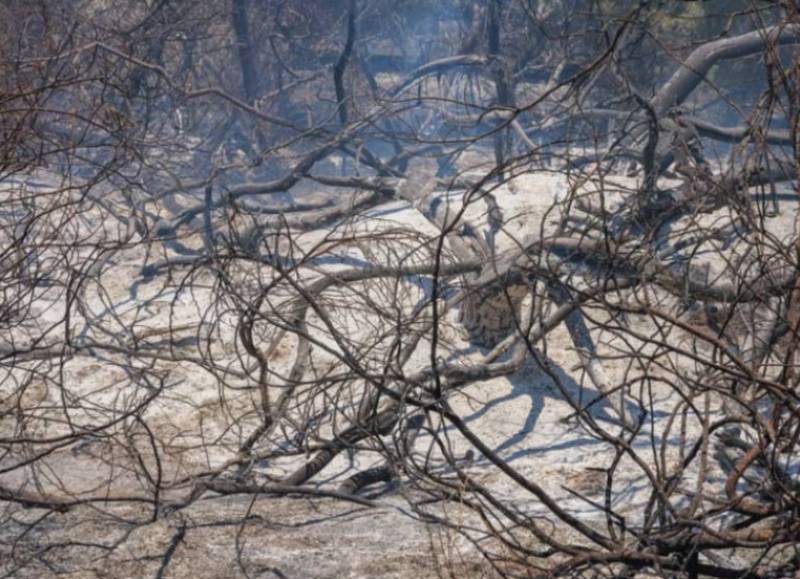
The flames may be dying down, but for some of the areas hit by Spain’s devastating wildfire season, the next danger could be arriving from the sky.
After months of fires, huge areas of forest and countryside have been left stripped of vegetation, and environmental experts are now warning about what could happen when heavy rain hits those exposed slopes. Without trees, plants and ground cover to hold the soil in place, rainwater can rush downhill carrying ash, charcoal, sediment and other organic material into rivers and reservoirs.
The result has been dubbed the era of “black rivers”, and experts warn that the consequences could stretch from wildlife and farmland to drinking water supplies and even people’s homes.
With some of the country’s worst fires only recently brought under control, there’s now a race to put measures in place before autumn and winter rains cause further damage.
Burned soil can take between one and five years just to start recovering some of its function and considerably longer to regain its fertility. Barriers made from branches and vegetation, terraces, earthworks and embankments can all help slow the flow of water and reduce erosion.
There’s another very different problem where Spain’s infrastructure isn’t keeping up with what the country needs, and this time it’s housing rather than forests.
Spain desperately needs more homes, but more than 80,000 planned properties are being held up because there isn’t enough electricity capacity to connect them to the grid. BBVA Research has identified at least 12 provinces affected, including Madrid, Valencia, Alicante and Murcia.
It’s not that Spain has run out of electricity. The problem is that there isn’t enough available capacity in the places where large new housing developments are planned. New substations and grid upgrades may therefore be needed before some projects can proceed.
BBVA Research explained that expanding the grid for major developments can take five to eight years once planning, environmental assessments, bureaucracy, land purchases and construction are taken into account.
Alicante, as an example, has major developments including PAU 5, Vistahermosa/Nou Nazareth, Benalúa Sur and San Blas waiting for additional electricity infrastructure, while virtually all of the major developments examined in Murcia will also require investment in the network.
And since far too many of us are already struggling with the cost of living, the electricity situation is unwelcome news in another respect. Household electricity bills in Spain rose by 8.3% in July compared with the same month last year, according to Eurostat. That was considerably higher than the EU average of 1.6% and the eurozone's 2.1%.
 Only Italy recorded a bigger increase, at 13%, while Portugal saw bills rise by 6.1%. Germany and France actually recorded falls.
The government hasn’t brought back the temporary VAT reduction on electricity and gas that ended in June, but there is a longer-term measure that should eventually help. The tax on electricity generation revenue is being phased out, with officials expecting the changes to reduce household bills by around 6% once fully implemented.
For anyone looking at those rising electricity costs and wondering how on earth they’re supposed to afford a new home as well, the mortgage market isn’t making the situation particularly straightforward either.
Spanish banks approved 129,240 housing mortgages between April and June, making it the strongest June for mortgage lending in 16 years. That sounds encouraging until you look at what buyers are having to borrow and how much cash they need to find themselves.
The average mortgage has reached a record €176,453, while banks are becoming less willing to lend more than 80% of a property's value. High loan-to-value mortgages accounted for 9.6% of new loans in the second quarter, down from 11.6% a year earlier.
That matters because property prices have continued climbing. The average price reached €2,114 per square metre in June, almost 9% higher than a year earlier. Prices jumped particularly sharply in Murcia, where they were up 22.1%, while the Valencian Community recorded a 21% increase.
The result is a rather awkward combination: more mortgages are being approved, but homes are becoming more expensive and buyers still need to find a substantial deposit. Home sales have now fallen for eight consecutive months, with June transactions down 4% year-on-year.
The Bank of Spain doesn’t currently believe Spain is experiencing another property bubble like the one before the financial crisis. Instead, the main problem is the shortage of homes, with strong demand competing for limited supply.
And that brings us neatly back to the electricity problem. When tens of thousands of potential homes are sitting on land that can be developed but can’t yet be connected to the grid, it’s difficult to see how Spain is going to build its way out of the housing shortage quickly.
For households who already have a mortgage, there’s another figure worth keeping an eye on. Mortgage repayments were taking up 36.1% of household income in the first quarter of 2026, slightly above the Bank of Spain’s 35% affordability benchmark.
Alicante

There’s a rather unusual piece of airport history sitting on the tarmac at Valencia Airport, where a Boeing 747 has been parked for 18 years and may finally be heading for the exit.
The enormous cargo plane has been at Manises since 2008 after its owner, the airline Pronair, ran into financial trouble and accumulated unpaid debts. Aena is now continuing the administrative process that could eventually lead to the abandoned Jumbo being put up for public auction.
The aircraft was brought to Spain by Yecla businessman Isidoro Romero, who founded Pronair during the boom years with plans to transport cargo internationally, including between Spain and China. Unfortunately, the grand ambitions didn’t last and the 747 never got to fulfil the role it was intended for.
Whether anyone will want this particular Jumbo after almost two decades sitting outdoors is another question. Its current value is anyone’s guess but if it can’t be preserved, there’s also a possibility that its materials could be offered to an aviation-related educational, cultural or non-profit organisation.
From one enormous machine that has spent years sitting around to thousands of people who have been doing anything but, the Costa Blanca has been exceptionally busy this August.
Hotels across the Valencian Community recorded an average 92.1% occupancy during the first half of August, slightly higher than the same period last year. Benidorm led the way at 93.1%, while Alicante was close behind on 92.9%.
Alicante also recorded the biggest improvement, with occupancy almost five percentage points higher than during the first half of August 2025. The Costa Blanca excluding Benidorm reached 92.1%, while Valencia province recorded 91.9% and Valencia city 90.4%. Castellón was slightly lower at 88.6%.
In other words, there wasn’t much empty space anywhere, with virtually every destination hovering around the 90% mark.
The figures from BigDataHOSBEC also show that the type of visitor heading to the area is changing. Spanish visitors still account for just over half of all overnight stays, at 50.3%, but international tourism is becoming increasingly important. British visitors are the biggest international group, accounting for 19.5% of stays.
There’s still plenty of interest in the second half of August, too, with 86% of available rooms already covered by confirmed bookings.
And for anyone who’d rather fly across the Atlantic than squeeze onto an overcrowded Costa Blanca beach, there’s some good news coming next summer.
Valencia and New York are set to be connected by a direct flight again from June 2, 2027, bringing back a route that disappeared 14 years ago when Delta Air Lines ended its service in 2012.
United Airlines will operate the new service between Valencia Airport and Newark Liberty International Airport three times a week, with flights on Mondays, Thursdays and Saturdays from Valencia.
 The route will be operated using an Airbus A321XLR, United’s newest international aircraft. Passengers will have access to features including Starlink Wi-Fi for MileagePlus members, 4K OLED screens, Bluetooth connectivity and the airline’s new Polaris business suite.
Flights will leave Valencia at 3.30pm and arrive in New York at 6.30pm local time, with the return service departing Newark at 11.15am and arriving in Valencia at 1pm. The journey will take between around seven hours 45 minutes and nine hours.
Unfortunately, the final story from the Valencian Community is considerably less cheerful.
The Guardia Civil is investigating the deaths of an Irish couple aged 50 and 45, whose bodies were discovered at their rented home in Cullera on Tuesday August 25.
Their two minor children reportedly found their parents and sought help from their landlord, who contacted the emergency services. Local Police and Guardia Civil officers attended the property before the investigation was passed to the Guardia Civil's Homicide Unit.
The circumstances surrounding the deaths have not been established and investigators are looking at several possibilities. Reports have indicated that the couple were found in a jacuzzi and that officers identified circumstances requiring further investigation, including possible signs of drug use.
Samples have been taken from the jacuzzi for analysis, while the on-call court in Sueca has been notified as investigators work to establish exactly what happened.
Cullera Town Council's social services department is now looking after the couple’s two children, who have special needs.
At this stage, the Guardia Civil has not established a confirmed cause of death, and the investigation remains ongoing.
Andalucía

If the weekly food shop feels noticeably more expensive in Andalucía these days, the figures suggest there’s a good reason for it.
New figures from Spain’s Ministry of Agriculture, Fisheries and Food show that people in the community spent an average of €1,692.44 per person on food and drink in 2025, up 6.2% from the previous year. That works out at roughly €102 more per person over the course of a year.
Andalucía is still towards the lower end of the national table, with the Spanish average reaching €1,874.75 per person. Consumption was also lower than the national average, at 544.70 units per person compared with 577.32 across Spain.
That doesn’t necessarily mean people are eating dramatically less, though. Consumption in Andalucía actually increased by 1.6% last year, suggesting that the bigger increase in spending is largely down to what food costs rather than a huge change in how much people are buying.
And while we’re talking about things costing money, there’s some potentially interesting news for anyone with an eye on property in Almería.
The Murcia-Almería AVE railway is moving into the final stages of construction, with track installation and electrification now under way along parts of the 198-kilometre route.
One of the most significant developments for the area will be the new Vera-Almanzora station, which is being built south of Vera and will serve the surrounding coastal and inland communities. The government has already authorised the construction contract, worth almost €15.7 million, with the station set to include parking for at least 150 vehicles.
Once operational, the line will eventually provide a high-speed connection between Murcia and Almería, making towns including Vera, Vera Playa, Garrucha and Mojácar considerably easier to reach without a car.
There’s still no confirmed date for passengers to board the first train, however. Construction is expected to reach completion towards the end of 2026, but testing, safety checks and commissioning will have to take place before services can begin. Independent estimates have pointed towards around 2029, although that isn’t an official opening date.
For property owners and potential buyers, the attraction is fairly obvious. Better rail connections could make the area more accessible for residents, holidaymakers and people travelling from elsewhere in Spain. It doesn’t guarantee that property prices will shoot up, but having a high-speed railway on the doorstep certainly changes the area's accessibility.
And finally, if you’re looking for something to do this weekend, Mojácar is in full fiesta mode, with the annual celebrations in honour of the town’s patron saint, San Agustín, continuing until Sunday August 30.
The big day is Friday August 28, when the feast of San Agustín will include a lunchtime fair, live music, a mass and the traditional procession carrying the figure of the saint through the town. There’s more music and a DJ later in the evening, with the celebrations continuing on Saturday and Sunday.
Saturday brings children's activities and the traditional Parque de las Familias, while Sunday evening sees one of the fiesta's most distinctive traditions, the horse and rider ribbon race accompanied by the Mojácar town band.
If you’re staying down on the beaches and don’t fancy tackling the journey back down the hill after a few hours of fiesta fun, there’s an all-night bus service on Friday and Saturday night, with the final bus leaving at 6.15am. Fares are €1.20 before midnight and €2 afterwards.
That’s all for this week. Thank you for reading and we’ll see you again for more next Friday.